Learn whether you can bring witnesses to NYC Small Claims Court, what kind of witness is helpful, and what to do if a witness refuses to come.
Introduction
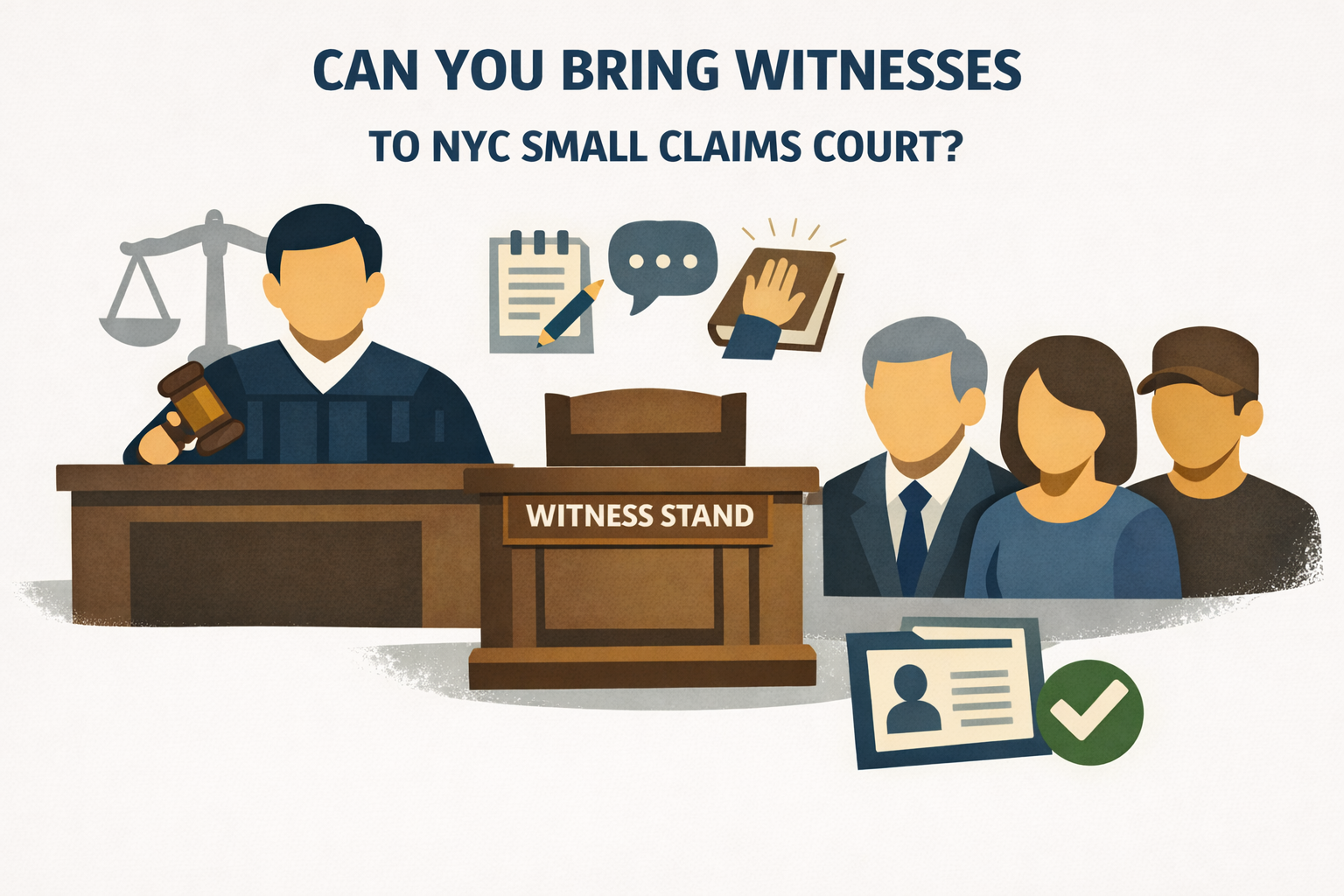
Yes — you can bring witnesses to NYC Small Claims Court. Witnesses can help support your side by describing what they saw, heard, or know firsthand about the dispute. The official NYC Small Claims FAQ specifically addresses what to do if you want a witness to come to trial but they refuse.
Disclaimer: This article is for informational purposes only. We are not attorneys and do not provide legal advice.
Quick Answer
A witness can be useful if that person has direct knowledge of the facts in your case. For example, a witness may have seen damage, heard an agreement, observed a payment, or been present during an important conversation. If a witness does not want to come voluntarily, the court handbook says you may ask the clerk for a subpoena.
What Kind of Witness Helps Most?
The most helpful witness is usually someone with firsthand knowledge of the events. In small claims court, that often means a person who:
- saw what happened,
- heard the agreement or conversation,
- knows about the payment,
- or can confirm the condition of damaged property.
Because Small Claims Court is focused on proving what happened, witnesses are strongest when they are speaking from personal observation rather than repeating what someone else told them. This matches the court’s broader guidance that parties should bring all evidence needed to prove their case.
Do You Have to Bring a Witness?
No. A case can still move forward without witnesses if the documents, photographs, receipts, contracts, messages, or other records are enough to explain the dispute. But in some cases, a witness can make the facts clearer, especially when there is a disagreement about what was said or what happened. The court handbook lists witnesses and records as important ways to prove a claim or defense.
What If the Witness Refuses to Come?
The official small claims handbook says that if a witness will not come voluntarily, you can ask the Small Claims Court Clerk for a subpoena. A subpoena is a court order that can require the witness to appear and testify.
Can a Witness Be Required to Bring Documents Too?
Yes. The court handbook explains that a subpoena can also require a person to bring records or documents to court. That can be important if another person or business has papers that may help prove the case.
How Does a Subpoena Work?
According to the handbook:
- the clerk can help prepare the subpoena,
- it must be served by someone else who is 18 or older,
- and the witness must be paid a $15 witness fee at the time of service.
The subpoena gives the witness the court date and tells them what they are required to do.
Can You Force an Expert Witness to Testify?
Usually no. The small claims handbook explains that while expert witnesses may sometimes be useful in technical cases, you generally cannot use a subpoena to force an expert witness to testify. In most situations, an expert has to agree to appear and is usually paid for that time.
What Should a Witness Be Ready For?
A witness should be ready to answer questions clearly and simply about what they personally know. Since Small Claims Court is meant to be straightforward and informal, direct answers based on firsthand knowledge are usually the most useful. Court guidance also says parties should come prepared and organized for hearing day.
Quick Reference
- You can bring witnesses to NYC Small Claims Court.
- A witness is most useful when they have firsthand knowledge of the facts.
- If a witness refuses to come, you may ask the clerk for a subpoena.
- A subpoena may also require records or documents to be brought to court.
- A subpoenaed witness is entitled to a $15 witness fee.
- You generally cannot force an expert witness to testify with a subpoena.
Conclusion
Yes, you can bring witnesses to NYC Small Claims Court, and in the right case they can be very helpful. The strongest witnesses are people who personally saw, heard, or know important facts about the dispute. If someone refuses to appear, the court provides a subpoena process that may help bring that witness or their records into the case.
If you need help getting started, we offer preparation and filing services to make the process easier and more organized.