Learn the difference between a judge and an arbitrator in NYC Small Claims Court, including appeal rights, speed, and how each option affects your case.
Introduction
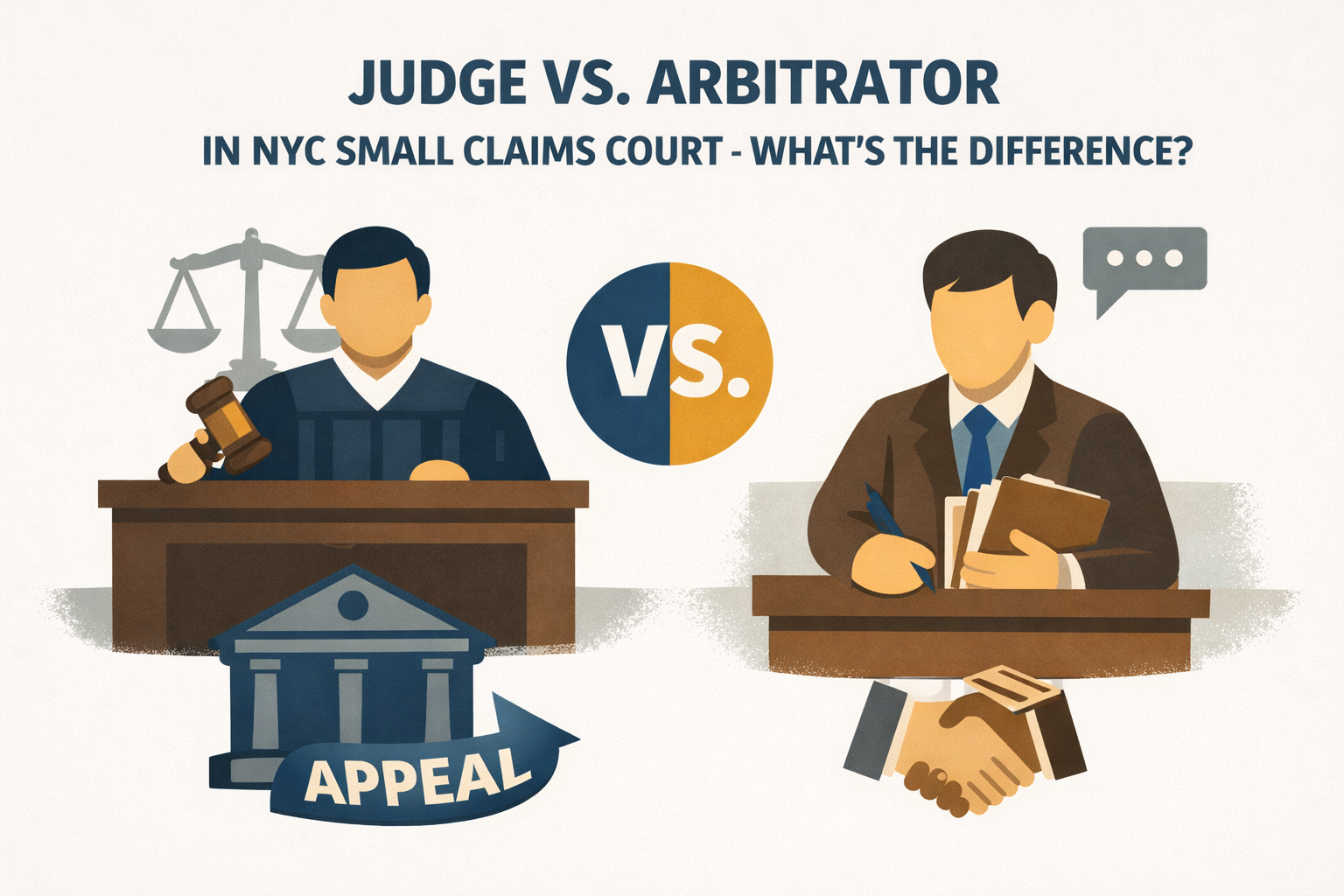
In NYC Small Claims Court, your case may be heard by either a judge or an arbitrator. Both can decide small claims cases, but they are not the same. The biggest difference is that a judge’s decision may be appealed, while an arbitrator’s decision generally cannot be appealed because there is no official court record of the hearing.
Disclaimer: This article is for informational purposes only. We are not attorneys and do not provide legal advice.
Quick Answer
A judge is a court official, while an arbitrator in NYC small claims is typically an experienced attorney trained to hear and decide small claims matters. Arbitrators are often available sooner, which can make the process faster, but their decisions are generally final. A judge’s decision takes place on the record and can usually be appealed.
What Is a Judge in NYC Small Claims Court?
A judge is the official court decision-maker. If your small claims case is heard by a judge, the hearing is recorded by a court reporter or recording device, creating the official record needed if an appeal is later filed.
What Is an Arbitrator in NYC Small Claims Court?
An arbitrator is an attorney trained to hear and decide small claims cases. The NYC Bar’s small claims FAQ explains that arbitrators are used because there are many cases and more arbitrators than judges available, which often means a case can be heard more quickly.
Which One Is Faster?
In many cases, an arbitrator can hear the case sooner. Public guidance from the NYC Bar says that having a case heard by an arbitrator is often faster because there are more arbitrators available than judges.
Which One Can Be Appealed?
This is the most important difference for many people.
- A judge’s decision may generally be appealed.
- An arbitrator’s decision generally cannot be appealed.
The official NYC small claims materials explain that the reason is simple: an arbitrator hearing does not create the official record that an appellate court would need.
Does the Law Change Depending on Who Hears the Case?
No. An arbitrator is still expected to apply the same law to the case as a judge would. The difference is mainly in the process, especially the speed of the hearing and whether there is a right to appeal afterward.
Can You Choose Between a Judge and an Arbitrator?
Yes, in many NYC small claims cases you may choose whether the matter will be heard by a judge or an arbitrator. The small claims handbook states that parties may choose to have a judge or arbitrator try the case.
What Happens If You Want to Appeal Later?
If keeping the option to appeal matters to you, a judge is usually the safer choice. The official appeals page says that an appeal may be filed from a judgment or order, but the small claims materials make clear that this is limited to decisions made by a judge, not an arbitrator.
What About Juries?
The small claims handbook explains that cases decided by an arbitrator or mediator do not have juries. Cases decided by a judge do not have juries unless the defendant demands one, where allowed.
Which Option Is Better?
There is no single answer for everyone.
A judge may be more appealing if:
- keeping appeal rights is important,
- the case is more complicated,
- or you want the decision made on the official court record.
An arbitrator may be more appealing if:
- you want the case heard more quickly,
- you are comfortable with the decision being final,
- and you want a faster path to resolution.
Quick Reference
- A judge’s decision may generally be appealed.
- An arbitrator’s decision generally cannot be appealed.
- Arbitrators are often faster to get before because there are more of them available.
- Arbitrators are trained attorneys who hear and decide small claims cases.
- A judge’s hearing creates the official record needed for an appeal.
Conclusion
The main difference between a judge and an arbitrator in NYC Small Claims Court is not whether they can decide your case — both can — but what happens after the decision. A judge’s ruling usually preserves appeal rights, while an arbitrator’s ruling is generally final. For many people, that is the key factor when deciding which option to choose.
If you need help getting started, we offer preparation and filing services to make the process easier and more organized.