Learn what may happen if you lose a small claims case in NYC, including judgment payment, appeals, default issues, and possible collection steps.
Introduction
If you lose a small claims case in NYC, the court may enter a judgment against you for the amount awarded. What happens next depends on how the case was decided, whether you appeared, and whether the winning side tries to collect. If the decision was made by a judge, there may be limited appeal rights. If it was made by an arbitrator, the decision is generally final.
Disclaimer: This article is for informational purposes only. We are not attorneys and do not provide legal advice.
Quick Answer
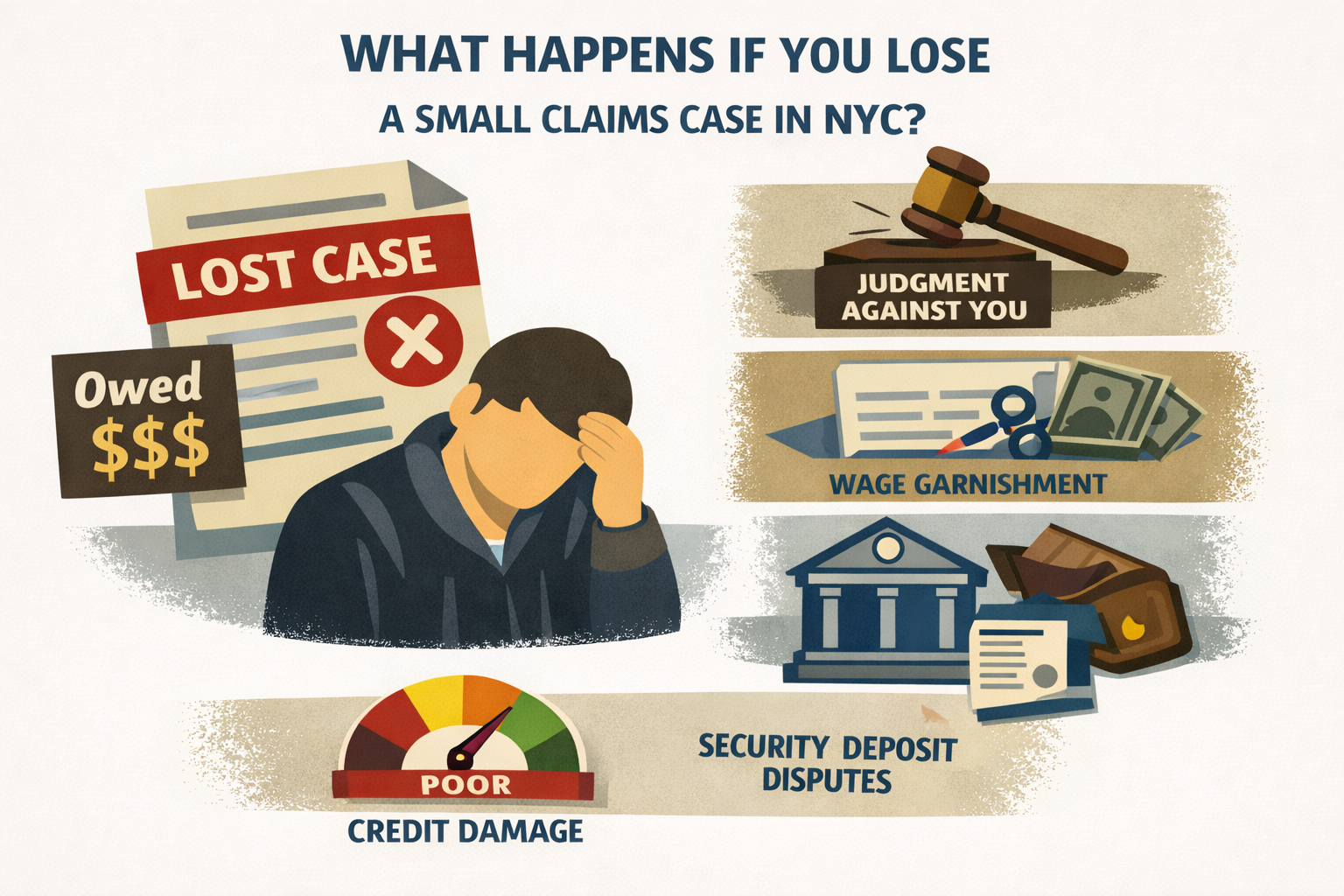
Losing a small claims case usually means the court has decided that you owe money to the other side. After that, the main issues are usually whether you will pay the judgment, whether you can appeal, and whether the other side may try to collect if you do not pay.
You May Owe a Judgment
The most direct result of losing is that a judgment may be entered against you. That judgment is the court’s decision about how much money is owed. If the judgment is not paid, the winning side may later take steps to enforce it.
Can the Other Side Collect Right Away?
Collection does not always happen immediately, but it can happen if the judgment remains unpaid. NYC 311 says that if a small claims judgment has not been paid after 30 days, the winning side can ask the Sheriff’s Office to help collect the money and carry out orders of seizure where appropriate. It also notes that additional fees may be added when enforcement is used.
Can You Appeal If You Lose?
Sometimes. The official NYC small claims appeals page says that an appeal is started with a Notice of Appeal and that the filing deadline is generally 30 days from service of the judgment or order appealed from. But CourtHelp also says that, except for a default judgment issue handled differently, only a judgment or order made by a judge can be appealed. A decision made by an arbitrator generally cannot be appealed.
What If You Lost Because You Missed Court?
That is usually treated as a default judgment issue rather than a normal appeal issue. NY CourtHelp says the two most common reasons a court may vacate a default judgment are excusable default and lack of personal jurisdiction (bad service). To reopen the case, the person who defaulted usually must show both a good reason for missing court and a good reason why the other side should not win.
Does Losing Mean Your Side Was Never Heard Again?
Not necessarily. If you appeared and lost after a hearing, the next question is usually whether a limited appeal is available. If you did not appear and lost by default, the more common next step is asking the same court to vacate the default rather than filing a standard appeal first. Some court guidance outside NYC states this distinction directly, and NY CourtHelp’s default-judgment guidance follows the same basic approach.
Will You Need Extra Paperwork If You Challenge the Result?
Usually yes. If you appeal, the courts say you may need a Notice of Appeal, service on the other side, and possibly a transcript depending on the case. If you are asking to vacate a default, you may need papers explaining why you missed court and why the case should be reopened.
Quick Reference
- Losing may mean a money judgment is entered against you.
- If the judgment is unpaid after 30 days, the winning side may seek Sheriff enforcement.
- A judge’s decision may generally be appealed.
- An arbitrator’s decision is generally final.
- If you lost by missing court, you may need to ask the court to vacate the default judgment.
Conclusion
If you lose a small claims case in NYC, the main result is usually that you may owe a judgment. After that, the next steps depend on whether the case was decided by a judge or arbitrator, whether you appeared, and whether the judgment gets paid. In some situations, there may be appeal rights, and in default situations there may be a way to ask the court to reopen the case.
If you need help getting started, we offer preparation and filing services to make the process easier and more organized.