Learn the maximum amount you can sue for in NYC small claims court, what happens if your claim is higher, and which court may handle larger disputes.
Introduction
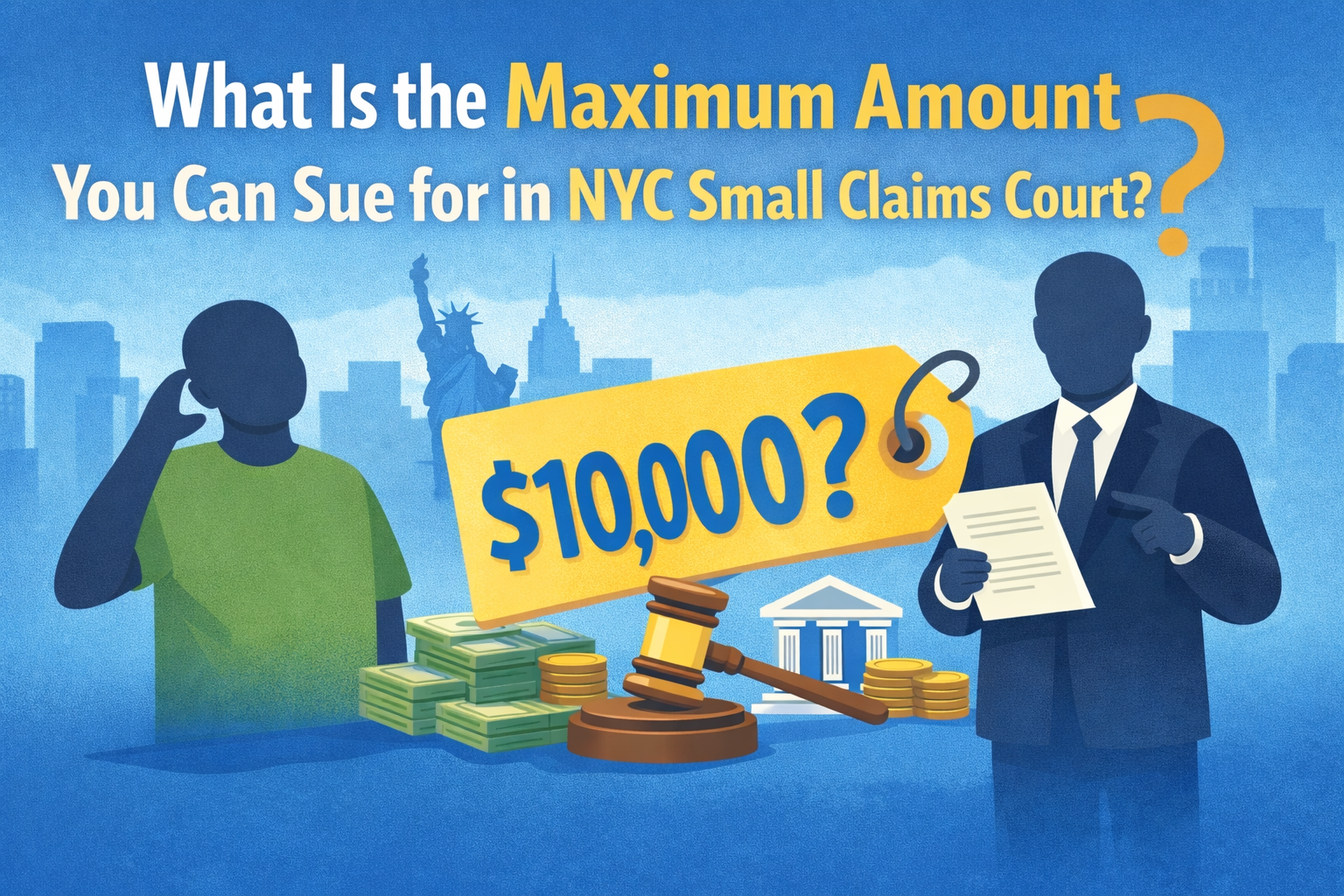
In New York City Small Claims Court, the maximum amount you can sue for is $10,000. That limit applies in the five boroughs: Manhattan, Brooklyn, Queens, the Bronx, and Staten Island. Small Claims Court is for money-only disputes, and claims above that amount must usually be started in a different part of the court system.
Disclaimer: This article is for informational purposes only. We are not attorneys and do not provide legal advice.
Quick Answer
If your case is being filed in NYC Small Claims Court, the claim limit is $10,000. You cannot bring a claim for more than $10,000 in that court, and you cannot split one larger claim into multiple smaller cases just to fit under the limit.
What the $10,000 Limit Means
The $10,000 figure refers to the amount of money you are asking the court to award. Small Claims Court in NYC handles disputes where someone is seeking a money judgment only. It is not the place to ask the court to force a person or business to perform work, return property, or do something other than pay money.
Can You File for More Than $10,000?
No. If your claim is more than $10,000, it generally cannot be brought in NYC Small Claims Court. Official NYC court guidance says higher-value disputes must be started in the Civil Part of the court or another appropriate court. The courts also state that a larger claim cannot be split into two or more small claims to get around the cap.
What If Your Claim Is Slightly Over $10,000?
If the amount in dispute is just over the small claims limit, many people want to know whether they can still use Small Claims Court. The official answer is that the court’s jurisdiction is capped at $10,000, so a claim above that amount belongs elsewhere unless the person filing chooses to pursue only up to the court’s limit. The courts specifically prohibit splitting the same claim into separate smaller cases.
Does the Limit Change Outside NYC?
Yes. The limit is different outside New York City. Public court guidance explains that the $10,000 cap applies in NYC, while lower limits often apply in other parts of New York State, including many city, town, and village courts. This is one reason it is important to know whether your case is truly being filed in NYC Small Claims Court and not another local court.
What Types of Cases Fit Under the Limit?
Many common disputes can fall within the $10,000 limit, including unpaid money, security deposit disputes, contractor issues, consumer problems, property damage, and similar money-only claims. The official NYC courts page notes that small claims cases vary widely, but they must still be for money and within the court’s dollar limit.
What Court Handles Larger Claims?
If the amount is above the small claims limit, the matter may need to be started in the Civil Court rather than the Small Claims Part. NYC 311 notes that Civil Court handles disputes up to a higher amount than small claims, making it the more likely venue when the amount in dispute is over $10,000.
Quick Reference
- NYC Small Claims Court limit: $10,000.
- Money only: Small Claims Court is for money judgments, not orders forcing someone to act.
- No splitting claims: A larger claim cannot be broken into smaller cases to fit the limit.
- Higher-value cases: Claims above $10,000 generally belong in another court part.
Conclusion
For cases filed in NYC Small Claims Court, the maximum amount you can sue for is $10,000. That makes small claims a practical option for many everyday money disputes, but anything above that amount usually needs to be filed elsewhere. Knowing the limit early can save time and help you decide which path fits your situation.
If you need help getting started, we offer preparation and filing services to make the process easier and more organized.