Learn what a counterclaim is in NYC Small Claims Court, when a defendant can file one, and how it may affect the outcome of a case.
Introduction
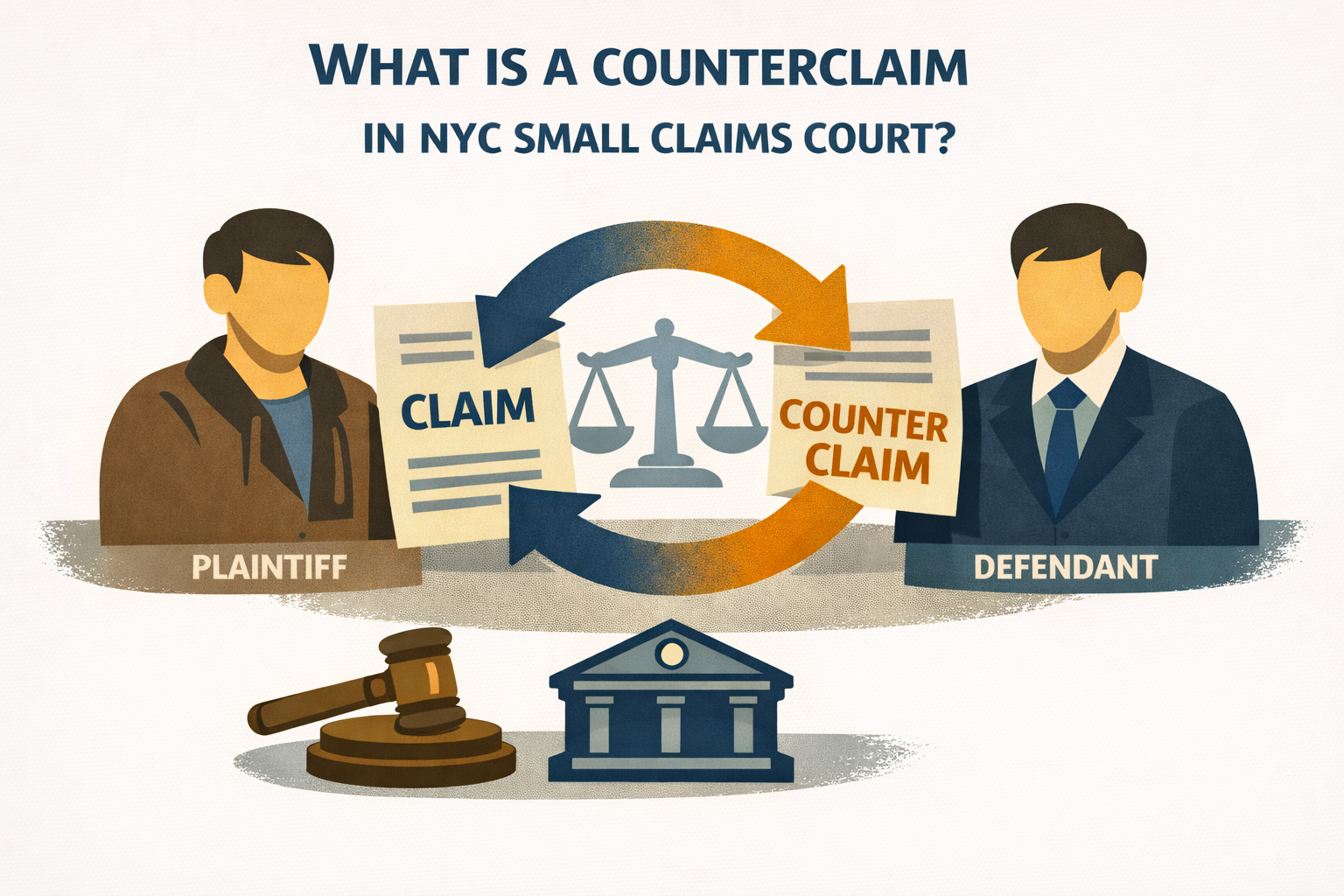
In NYC Small Claims Court, a counterclaim is a claim filed by the defendant against the plaintiff in response to the original case. Instead of only defending against the lawsuit, the defendant may also argue that the plaintiff actually owes them money as well. Both the original claim and the counterclaim are usually decided during the same case.
Disclaimer: This article is for informational purposes only. We are not attorneys and do not provide legal advice.
Quick Answer
A counterclaim is when the person being sued (the defendant) says the person who filed the case (the plaintiff) actually owes them money too. The court may hear both sides of the dispute during the same hearing and decide how much, if any, each party owes.
Why Counterclaims Exist
Small Claims Court is designed to resolve disputes efficiently. Sometimes both parties believe they are owed money related to the same situation. A counterclaim allows the defendant to present their side of the dispute without needing to start a separate case.
This helps the court:
- resolve the entire dispute in one hearing
- avoid multiple lawsuits about the same issue
- determine the final amount owed between the parties
Example of a Counterclaim
Here is a simple example of how a counterclaim might work:
- A contractor sues a homeowner for $5,000 for unpaid work.
- The homeowner argues the work caused damage and files a $3,000 counterclaim.
The court may review both sides and decide something like:
- the homeowner owes nothing,
- the contractor owes money to the homeowner, or
- one party owes the other a different amount than requested.
Both claims are considered together when the judge or arbitrator makes a decision.
When a Defendant Can File a Counterclaim
A counterclaim is typically filed when the defendant believes the plaintiff caused financial loss related to the same dispute. Examples may include situations where:
- services were incomplete or poorly performed
- property damage occurred during work
- money was overpaid
- goods were defective
- an agreement was not followed by the plaintiff
In these situations, the defendant may choose to bring their own claim as part of the same case.
How Counterclaims Affect the Case
When a counterclaim is filed, the case becomes a dispute where both parties are seeking money. The court will hear both sides and decide:
- whether the plaintiff is owed money
- whether the defendant is owed money
- or whether neither side proved their claim
Sometimes the court may offset the claims, meaning the final decision reflects the difference between the two amounts.
What the Court Decides
After hearing both the claim and counterclaim, the judge or arbitrator may decide:
- the plaintiff wins
- the defendant wins on the counterclaim
- each side partially wins
- neither side wins
The final judgment will determine if any money is owed and by whom.
When do you file a counterclaim?
If you receive a letter summoning you to court, the letter will specify how long you have to file your counterclaim. Typically, you have up to 5 to 7 days, depending on the notice, to file your counterclaim, thereafter, if you miss this initial window, you can make a special request on the day of the hearing to file your counterclaim. This may result in the initial court date being rescheduled due to the new claim.
Quick Reference
- A counterclaim is a claim filed by the defendant against the plaintiff.
- It allows both sides to ask the court for money during the same case.
- The court usually hears the claim and counterclaim at the same hearing.
- The final decision determines how much, if anything, each side owes.
Conclusion
A counterclaim allows the defendant in a NYC small claims case to respond not only with a defense, but with their own request for money from the plaintiff. This process allows the court to review the full dispute and decide the outcome in one hearing rather than requiring separate cases.
If you need help getting started, we offer preparation and filing services that allow you to create your claim online and have it properly processed for NYC filing.